The Turkish Van is a unique and ancient cat breed famous for its striking white coat with colored markings and an unusual love for water. Originating from the Lake Van region in Turkey, this highly intelligent and energetic cat is known for its playful spirit, strong personality, and affectionate bond with its human companions. The Turkish Van stands out not only for its beauty but also for its rare swimming ability and lively demeanor, making it a fascinating addition to any cat-loving home.
turkish van by pet care hub
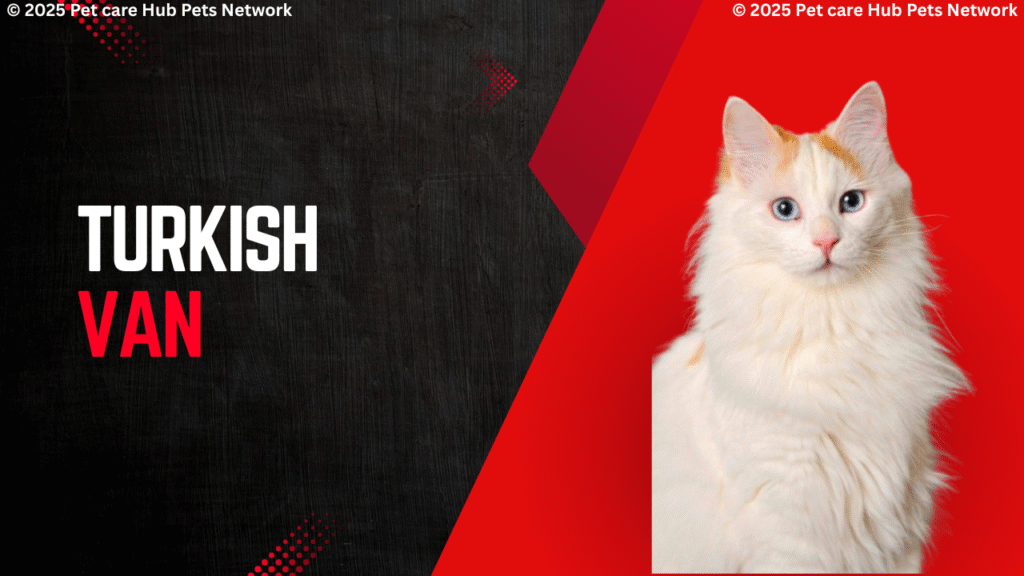
The Turkish Van cat is a breed unlike any other. Known for its love of water, playful demeanor, and distinctive appearance, the Turkish Van is a feline that defies conventional cat behavior. Nicknamed the “swimming cat,” this breed is as captivating in personality as it is in beauty. But what exactly makes Turkish Van cats so curious and intelligent? What’s the story behind their origin, and how do they fit into a family setting? In this comprehensive guide, we’ll explore the mysterious, playful, and inquisitive nature of the Turkish Van, shedding light on why this rare breed is adored by cat lovers around the world.
Origins and History: A Cat of Myth and Legend
The Turkish Van is an ancient breed with roots tracing back to the rugged, mountainous regions of modern-day Turkey, specifically around Lake Van. Evidence suggests that these cats have been around for thousands of years, appearing in local folklore and ancient art.
According to legend, the Turkish Van was aboard Noah’s Ark and, after the floodwaters receded, leapt into the water and swam ashore in the region now known as Eastern Turkey. While this tale is charming, the breed’s love of water is a scientifically observed trait, not just a myth.
The breed was first introduced to Europe in the 1950s by British photographers Laura Lushington and Sonia Halliday. They were gifted a pair of cats during a trip to Turkey and were fascinated by their love for water and their unique coat. Upon bringing them back to the UK and breeding them, they realized the offspring retained the same distinctive characteristics, suggesting a strong genetic component to the breed’s traits.
more: Myth and Legend
Physical Characteristics: Elegance in Motion
Turkish Van cats are striking in appearance. Their semi-longhaired coats are soft and cashmere-like, designed to be water-resistant. Unlike most longhaired cats, they lack an undercoat, which contributes to their light, silky fur and makes grooming relatively easy.
They are typically white with color on the head and tail—a pattern called “Van pattern.” The color patches may be red, black, cream, blue, or tortoiseshell. Their eyes are another distinguishing feature: they can be amber, blue, or odd-eyed (one blue, one amber), a trait that adds to their mystical allure.
Large, muscular, and athletic, they are built for action. Turkish Vans often surprise their owners with their incredible jumping ability, able to leap to high places with minimal effort.
turkish van by pet care hub
Personality Traits: Curiosity Knows No Bounds
Turkish Van cats are curious by nature. They are energetic, intelligent, and driven by a strong desire to explore their surroundings. While many cats are content to lounge by the window, the Turkish Van is more likely to be found climbing cabinets, peeking inside drawers, or testing the physics of water in your sink.
Some of the most notable personality traits include:
Love for Water
Unlike most feline breeds, the Turkish Van not only tolerates water but actively enjoys it. They will play in their water bowl, paw at dripping faucets, and may even join you in the bathtub or shower. This behavior has earned them the nickname “the swimming cat.”
High Intelligence
Their intelligence is often compared to that of a dog. Turkish Vans can learn tricks, respond to commands, and even open doors. Their brains are always active, and they need regular mental stimulation to stay happy.
Playfulness
This breed retains its kitten-like energy well into adulthood. They love interactive toys, puzzles, and games that challenge their minds. Fetch is a favorite pastime, and many Turkish Van owners report their cat bringing toys to initiate play.
Strong-Willed and Independent
Turkish Vans are not your typical lap cats. While they can form strong bonds with their owners, they prefer to interact on their terms. They appreciate affection but will often initiate it themselves. This independent streak can sometimes be mistaken for aloofness, but it’s just part of their curious and confident nature.
Social but Selective
While they are social animals, Turkish Vans are usually more bonded with their primary caregivers. They can be shy around strangers but quickly warm up once they feel safe. Some may even develop dog-like loyalty to their chosen human.
Ideal Environment: Where Curiosity Can Thrive
Turkish Vans thrive in environments that allow for exploration and play. A multi-level home with plenty of vertical spaces like cat trees, shelves, and window perches is ideal. Because of their curiosity, it’s essential to ensure that your home is “cat-proofed.” Dangerous items like cords, toxic plants, and open windows should be managed carefully.
Interactive toys and puzzle feeders are highly recommended. They also enjoy having access to water play. Consider providing shallow water dishes or even a small indoor fountain where they can indulge their aquatic interests safely.
Turkish Vans are also known for their hunting instincts. Providing stimulation through laser pointers, feather wands, and other chase toys helps satisfy this natural drive.
Compatibility with Families and Pets
Turkish Van cats make excellent companions for active families and individuals who appreciate a highly interactive pet. They do well with respectful children who enjoy playtime and can engage their energetic spirit.
When it comes to other pets, Turkish Vans are generally tolerant and can get along with other cats and even dogs, especially if they are introduced properly. However, because of their dominant personality, they may prefer to be the alpha pet in the household. Supervision and gradual introductions can help smooth the transition.
Grooming and Care: Low Maintenance, High Reward
Despite their luxurious appearance, Turkish Vans are relatively low-maintenance. Their single-layer coat resists matting, and brushing once or twice a week is usually sufficient to keep them looking their best.
However, due to their active nature and love of water, you might find yourself wiping down wet surfaces or dealing with a curious paw in your glass of water.
Routine care should include:
- Brushing: Weekly sessions to remove loose hairs.
- Dental Care: Regular brushing and dental treats.
- Nail Trimming: Every couple of weeks.
- Ear Cleaning: As needed to avoid infections.
Because they are such a rare and valuable breed, it’s advisable to keep them indoors to protect them from accidents or theft.
Health and Longevity
Turkish Vans are generally healthy cats with few breed-specific genetic problems. Their average lifespan ranges from 12 to 17 years with proper care. Routine veterinary checkups, a nutritious diet, and regular exercise can help ensure a long, happy life.
One condition to watch for is hypertrophic cardiomyopathy (HCM), a heart condition seen in many breeds. Responsible breeders screen for this and other hereditary issues.
Fun Facts About Turkish Vans
- They have been featured on Turkish postage stamps—a symbol of national pride.
- Some Turkish Vans exhibit seasonal coat changes: thicker in winter, lighter in summer.
- Their love of water might stem from their origin in a hot climate, where swimming helped them cool down.
- They’re a natural breed, not developed through artificial crossbreeding.
- In Turkey, they are considered a national treasure and are protected in their native region.
Tips for Potential Owners
- Be ready for action. Turkish Vans are not the type to sit still for long.
- Invest in enrichment. Cat trees, climbing shelves, and rotating toys are a must.
- Provide affection on their terms. They love their humans but enjoy independence.
- Secure water areas. They might turn on faucets or jump into fish tanks if not watched.
- Socialize early. The earlier they’re exposed to people and other pets, the better they adapt.
Turkish Van cats are a blend of beauty, brains, and boundless curiosity. Their athleticism, intelligence, and playful spirit make them one of the most entertaining and rewarding cat breeds to own. However, they are not for everyone. Their high energy and independence require an owner who can match their zest for life and provide a stimulating environment.
If you’re looking for a quiet, decorative lap cat, the Turkish Van might not be your match. But if you want a loyal, intelligent, and endlessly entertaining companion who might join you for a swim or open your cabinets just to see what’s inside, then the Turkish Van could be the perfect feline friend.
In understanding the curious nature of Turkish Van cats, we gain not only appreciation for their unique qualities but also a glimpse into a world where the ordinary rules of cat behavior simply do not apply.
Love learning about unique cat breeds like the Turkish Van?
Subscribe pet care hub to our newsletter for the latest tips, breed profiles, care guides, and feline facts delivered straight to your inbox.